Pet-Friendly Kitchen Cleaning Routine + Organizer Checklist
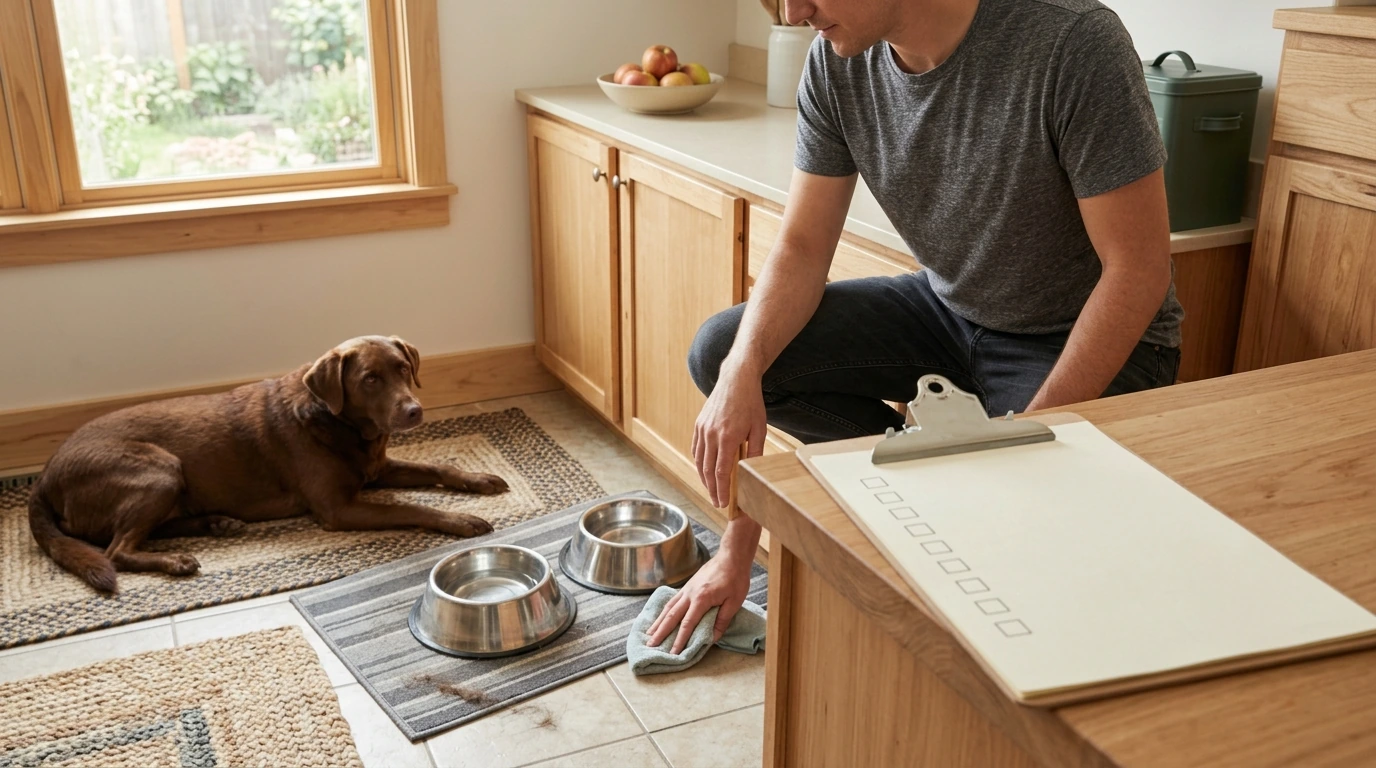
A Tidy Home With Pets: A Simple Cleaning Rhythm + Pet-Friendly Kitchen Organizer Checklist
Pets make a home feel lived-in—in the best way. They also add fur, crumbs, muddy pawprints, litter scatter, and the occasional surprise mess. The easiest way to keep your space tidy (without constantly “deep cleaning”) is to run a predictable routine: a few quick resets each day, a focused weekly sweep, and a monthly refresh. Our printable checklist and pet-friendly kitchen organizer pages are built to make that routine feel automatic—so your kitchen stays under control even on busy days.
The “tidy with pets” mindset: clean less by resetting more often
When you have pets, the biggest win is learning to separate “tidy” from “sanitize.” Tidying (putting items away, clearing surfaces, emptying trash) solves most pet-related chaos quickly. Sanitizing can happen in targeted spots, on a realistic schedule.
- Separate “tidy” from “sanitize.” Most pet messes are solved faster by tidying first, then spot-cleaning.
- Use short time blocks. Think 5 minutes after meals, 2 minutes at the door, 1 minute before bed.
- Create zones. Entryway (dirt control), feeding station (crumb control), counters (hair control), floors (pawprint control), and laundry (blanket/toy rotation).
- Pick a “good enough” baseline. Clear sink, cleared counters, swept pet zone, and trash out. Everything else is a bonus.
Daily kitchen reset that actually works with pets (10–15 minutes total)
The goal isn’t perfection—it’s preventing tomorrow’s mess from stacking on today’s. A quick daily rhythm keeps the kitchen feeling clean even if your pet is shedding, dribbling water, or scattering kibble like it’s their job.
- After meals: Wipe counters and table edges, then do a quick floor pass around the feeding area. Crumbs attract pests fast.
- Sink routine: Rinse bowls, wash or load into the dishwasher, and wipe the sink rim where residue clings.
- Fur control: Keep a lint roller or microfiber cloth in a drawer for quick swipes on chair seats and pet-favorite corners.
- Trash check: If wet food, treats, or scraps were involved, tie off the bag early to prevent odors.
- End-of-day sweep: A fast sweep/vacuum of the pet zone + main walkway resets the whole room.
Quick kitchen tidy map for pet homes
| Moment | Task | Why it helps |
|---|---|---|
| Morning | Refresh water bowl + wipe mat | Prevents slime buildup and keeps drips from spreading |
| After meals | Wipe counters + sweep feeding zone | Stops crumbs, grease, and tracked kibble |
| Midday (2 minutes) | Spot-clean pawprints by door | Prevents dirt from traveling room-to-room |
| Evening | Run dishwasher / wash bowls + take out odor-prone trash | Reduces smells and bacteria overnight |
| Before bed | Reset surfaces (clear counters, put treats away) | Prevents pets from counter-surfing and keeps mornings calmer |
Weekly cleaning checklist for pet households (the “catch-up” layer)
Weekly tasks are where you reclaim the corners and “mystery fur drifts” that daily resets don’t catch. This is also when you stop odors at the source.
- Floors: Vacuum edges/baseboards; mop hard floors with a pet-safe cleaner as needed.
- Feeding station: Wash mats, wipe the wall behind bowls, and check for crumbs under the mat.
- Appliance fronts: Wipe fridge, oven handle, and lower cabinets where nose prints and fur collect.
- Soft surfaces: Wash pet blankets/crate pads and rotate a spare set so there’s always a clean option.
- Air quality: Empty vacuum canisters and clean brush rolls to keep suction strong.
Monthly refresh: the tasks that keep odors and fur from coming back fast
- Deep-clean the pet zone: Move bowls and bins, clean underneath, and wipe lower walls and cabinet kick plates.
- Pantry/treat audit: Toss stale treats, wipe containers, and store food in sealed bins to reduce pests and spills.
- Degrease + de-fur: Clean range hood filters (if applicable) and wipe vents and fan covers.
- Check problem spots: Corners near litter boxes, under the trash, and the entry rug—address the source, not just the symptom.
Pet-friendly kitchen organization that reduces mess automatically
Organization isn’t about making your kitchen “look pretty.” It’s about containing the mess to predictable places so cleanup is quick.
How to use the printable checklist (and keep it from becoming “another paper”)
Safe-cleaning basics for homes with pets
Helpful references:
CDC — Cleaning and Disinfecting,
U.S. EPA — Safer Choice,
ASPCA — People Foods to Avoid Feeding Your Pets.
Tools we keep on hand (so the routine stays easy)
- How to Keep Your Space Tidy with Pets | Printable Home Cleaning Checklist | Pet-Friendly Kitchen Organizer | Digital Download | Best Way to Keep Kitchen Tidy with Pets (our simplest “do this next” system for daily/weekly/monthly resets)
- Women’s Color-Blocking Letter Embroidery Oversized Sweatshirt (an easy throw-on layer for quick resets, laundry swaps, and cooler mornings at the door)
- Women’s Sheepskin Mules (slip-on comfort for those “two-minute paw stop” check-ins without tracking outdoor shoes around)
FAQ
What’s the fastest way to keep the kitchen tidy with pets every day?
Stick to a short daily reset: wash/rinse bowls, wipe counters, sweep the feeding zone, spot-clean pawprints by the door, and take out odor-prone trash when needed. Consistency beats occasional deep cleaning.
How often should pet bowls and feeding mats be cleaned?
Rinse and wash bowls daily (especially when serving wet food), and wash feeding mats weekly—or sooner if spills happen. Add a weekly wipe-down of the wall behind the bowls and a quick check for crumbs under the mat.
How can a printable checklist help if cleaning routines never stick?
A checklist gives you a visible plan and reduces decision fatigue. Customize it to a few non-negotiables, pair tasks with small triggers (like coffee brewing or trash night), and check off daily/weekly/monthly items to build momentum.















Leave a comment