Toddler Speech Checklist: Daily Habits to Grow Language
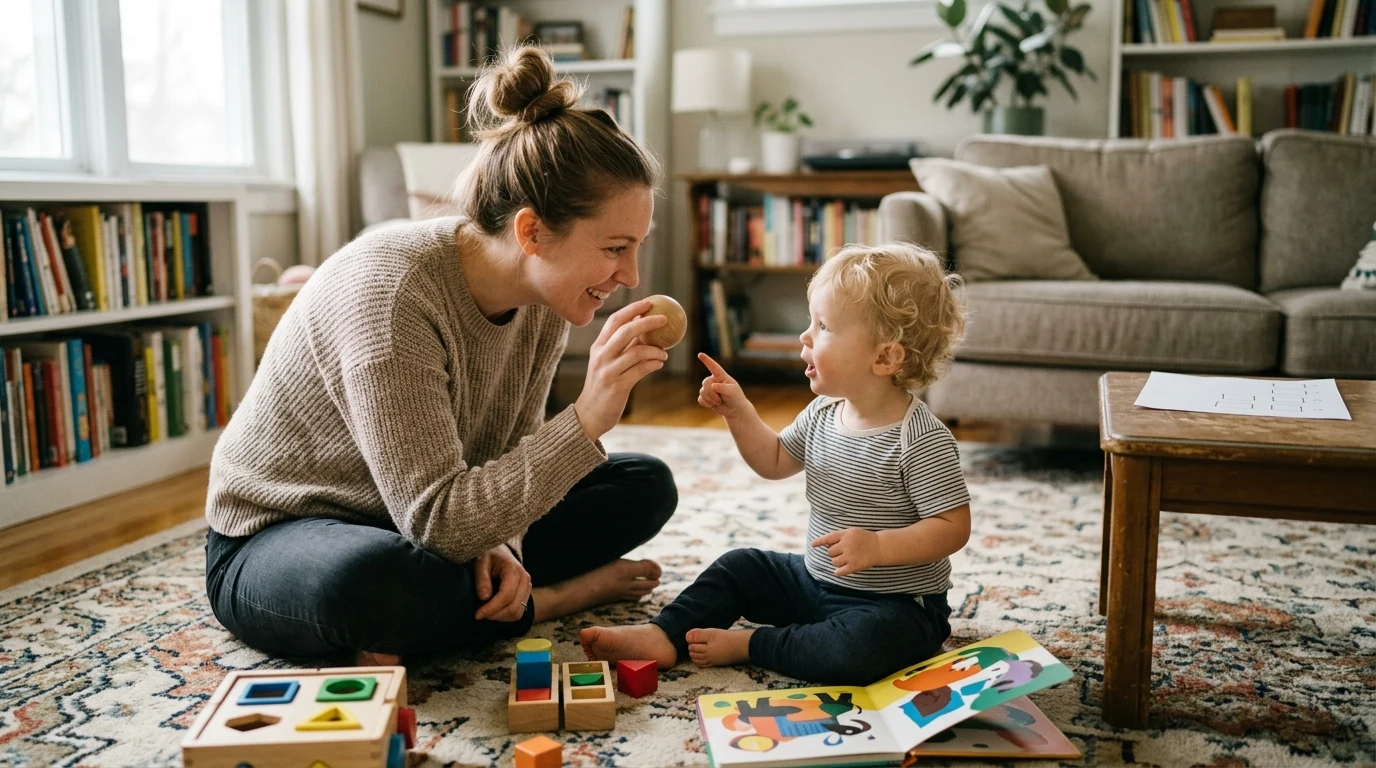
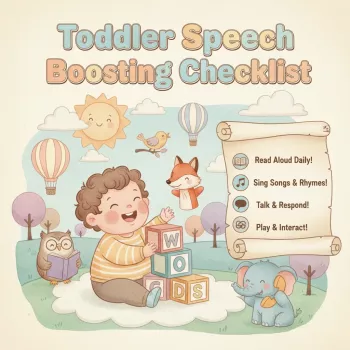
Toddler Speech Boosting Checklist: Daily Habits That Build Early Language
A simple, repeatable routine often helps more than occasional “practice sessions.” A checklist approach turns everyday moments—meals, play, dressing, and story time—into steady speech and language opportunities without adding stress. Small, frequent wins (a sound, a gesture, an attempt) add up fast when they happen every day.
What “speech” includes (and why it matters for toddlers)
Toddler communication grows in layers, and progress doesn’t always look like “new words” right away.
- Speech is how sounds are made and understood: clarity, pronunciation, and coordination of mouth movements.
- Language is words and meaning: vocabulary, sentences, and how words are combined in back-and-forth interaction.
- Social communication is the “people” side of talking: eye contact, turn-taking, gestures, and knowing how to join or end an interaction.
- Real progress can look like more gestures, more attempts, longer attention, or less frustration—even before a word “sticks.”
If you want a quick milestone reference, the American Speech-Language-Hearing Association (ASHA) and the CDC developmental milestones pages are helpful starting points.
Checklist mindset: build tiny speech moments into your day
The goal is consistency, not perfection. Instead of trying 30 techniques, choose a few actions you can repeat daily.
- Pick 5–10 repeatable actions and do them every day for two weeks before adding more.
- Attach “speech moments” to routines already happening: snack, bath, car seat, cleanup, getting dressed.
- Keep it short: 30–90 seconds at a time, many times per day. Toddlers learn through repetition in real contexts.
- Track attempts, not accuracy: a vocalization, sign, gesture, partial word, or “almost” counts as progress.
A simple daily speech-support checklist (sample)
| Routine moment | What to do | Example phrases | What to mark as progress |
|---|---|---|---|
| Snack/meal | Offer choices and pause for a response | “Apple or banana?” (pause 5 seconds) | Points, vocalizes, signs, or says part of a word |
| Play (5 minutes) | Follow the child’s lead and narrate simply | “Car go. Go fast. Stop.” | More eye contact, more sounds, more turns |
| Book time | Use 1–2 word prompts instead of quizzing | “What’s that?” → try “Dog… woof!” | Repeats a sound, points to pictures, fills in a familiar word |
| Getting dressed | Name body parts/clothing with a predictable pattern | “Sock on. Other sock.” | Anticipates the next word, attempts “sock,” “on” |
| Cleanup | Use “in/out/on” with gesture support | “Blocks in. In. In.” | Follows directions, uses gesture/word for “in” |
Core strategies that help most toddlers learn to talk
These strategies work well across many ages and communication styles, including toddlers who are late talkers or who use lots of gestures.
- Wait time: Model or ask, then pause long enough (up to 5–10 seconds) for a response. Toddlers often need extra processing time.
- Match your language to their level: If your toddler uses single words, model single words and 2-word combinations (not long sentences).
- Expand and recast: If your child says “ball,” respond with “big ball” or “ball go,” keeping it natural and upbeat.
- Use choices instead of yes/no: “Milk or water?” is more likely to spark a word attempt than “Do you want water?”
- Positive repetition: Repeat the target word naturally 3–5 times during the same activity (“open… open… open!”).
- Gestures/signs + speech: Pair words with pointing, waving, “more,” and “all done” to reduce frustration and boost understanding.
When frustration is high or progress feels stalled, AAP HealthyChildren.org offers parent-friendly guidance on language delays and next steps.
Age-by-age focus (flexible guide, not a test)
Every toddler develops at a different pace. Use stages as a general guide, then aim for the next “reachable” step.
Quick guide: what to practice by stage
| Stage | Helpful goals | Everyday practice ideas |
|---|---|---|
| 12–18 months | Gestures + first words | Play “give/take,” label favorite items, use “ready… set… go!” |
| 18–24 months | More words + simple combos | Choices at meals, action words in play (go, stop, open), “more/help” routines |
| 24–36 months | Short sentences + clarity | Pretend play scripts, “who/what/where” in books, expand child phrases by 1–2 words |
If your child understands far more than they can say, lean into comprehension plus low-pressure modeling and waiting. Understanding is a strong foundation, and expressive language often catches up when opportunities are frequent and motivating.
When to ask a professional (and what to track before you do)
Consider getting an evaluation if communication feels unusually difficult day-to-day or if certain red flags show up.
Printable checklist option for busy parents
For an easy, ready-to-use option, see the Toddler Speech Boosting Checklist (digital download).
Helpful picks (in stock)
- Toddler Speech Boosting Checklist | Printable Speech Therapy Guide for Parents | Early Language Learning Digital Download
- Women’s Color-Blocking Letter Embroidery Oversized Sweatshirt
FAQ
How many minutes a day should a toddler practice talking?
Aim for many short moments (30–90 seconds) spread across routines like meals, play, and books. Consistency and repetition in real-life situations usually help more than one long “practice session.”
Should parents correct toddler pronunciation?
Skip direct correction most of the time and model the correct word naturally: if they say “nana,” you can respond, “Yes—banana.” This keeps confidence high while giving a clear example to copy.
What if a toddler understands everything but says very little?
Expressive language can lag behind understanding, so focus on choices, waiting, and simple models that invite an attempt. If progress stalls, frustration grows, or you’re concerned about hearing, consider a hearing screen and a speech-language evaluation.














Leave a comment