Rolling Paint Drying Rack: Adjustable Hooks & Swivel Casters
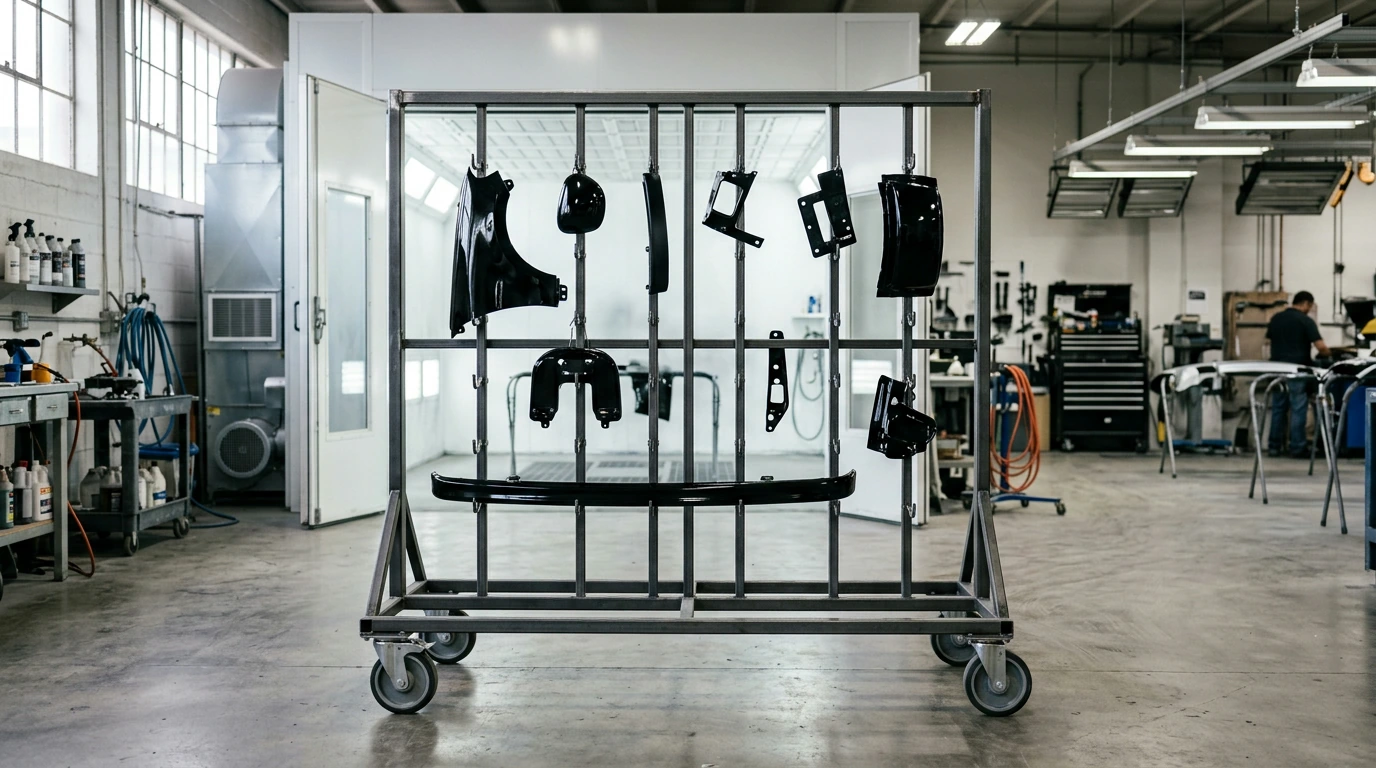
Heavy-Duty Drying Rack for Automotive Paint Parts: Adjustable Hooks, Swiveling Wheels, Cleaner Finishes
Fresh paint needs air, space, and stability. A rolling drying rack with adjustable hooks keeps panels and trim suspended to reduce contact marks, improve airflow, and make it easier to move parts between the booth, prep area, and curing zone without handling freshly coated surfaces. For collision, restoration, and fabrication work, that usually translates to fewer defects, less rework, and a calmer workflow when multiple parts are cycling through flash times and coats.
What a rolling parts drying rack solves in a paint workflow
When painted parts don’t have a safe place to hang, they end up leaning on walls, balancing on benches, or sitting on the floor—each option adds risk. A dedicated rolling rack turns “where do we put this?” into a repeatable process that protects the finish.
- Prevents edge dings and imprint marks caused by leaning panels against walls, sawhorses, or benches
- Improves airflow around wet paint to support more consistent flash and cure behavior
- Reduces rework from dust and debris kicked up when parts are placed on the floor
- Cuts handling risk by moving multiple parts at once on a stable frame
- Organizes parts by job so small pieces don’t get mixed or damaged between coats
Better staging also supports safer practices around coatings. For shop-level safety guidance around spray operations and exposure control, refer to authoritative resources like NIOSH spray painting guidance and general workplace programs from OSHA.
Key features that matter: adjustable hooks and swiveling wheels
Not all drying racks behave the same once you load them with mirrors, bumper trim, brackets, and small panels. Two features do most of the heavy lifting in day-to-day use: adjustable hooks (fit and spacing) and swiveling wheels (movement without drama).
- Adjustable hooks help fit different part sizes and hanging points (mirrors, bumper trim, brackets, small panels)
- Spacing control reduces the chance of parts touching each other as paint levels or as the rack is moved
- Swiveling wheels make tight turns possible around spray booth doors, prep tables, and tool carts
- A rigid, heavy-duty frame helps prevent sway that can cause parts to bump or swing into each other
- Hook rotation and placement flexibility can help keep show surfaces facing outward to reduce accidental contact
Quick checklist for evaluating a drying rack
| Feature | Why it matters | What to look for during setup |
|---|---|---|
| Adjustable hooks | Adapts to many part shapes and hang points | Hooks slide/lock easily; enough clearance for odd-shaped pieces |
| Swiveling wheels | Maneuverability without shaking parts | Smooth roll; stable turns; wheels track straight when pushed |
| Frame rigidity | Reduces wobble and swinging parts | No racking or flex when lightly pushed |
| Hanging spacing | Prevents parts from touching and ruining edges | Adequate gap between hooks and rows |
| Shop-friendly footprint | Fits booth/prep area without blocking walkways | Can park against a wall; passes through doorways |
Best uses in automotive refinishing and fabrication
A rolling hanging system earns its keep when surfaces are vulnerable—right after basecoat, between clear coats, or during primer surfacer steps where contamination can ruin the next sanding stage.
- Basecoat/clearcoat cycles for small panels and trim where contact points easily telegraph into the finish
- Primed parts drying between sanding stages to keep contamination off the surface
- Powder-coated or painted brackets and fabricated parts that need full perimeter airflow
- Detail and collision shops managing multiple parts per RO and needing job separation
- Home garages where space is limited and rolling storage keeps the floor clear
Even outside the booth, a rack can function as a “clean zone” staging point: hang parts after final tack, roll into position for spraying, then roll out to cure without setting anything down.
Setup tips for safer hanging and cleaner finishes
Most finish damage happens at touch points: hook contact, accidental brushing against a doorway, or a swing caused by a floor seam. A few habits make a noticeable difference.
Care, cleaning, and long-term durability
Product spotlight: Heavy-Duty Automotive Painting Drying Rack with Adjustable Hooks & Swiveling Wheels
For shops and garages that want a dedicated place to hang freshly painted parts, the Heavy-Duty Automotive Painting Drying Rack with Adjustable Hooks & Swiveling Wheels is built to keep multiple pieces off the floor and separated while they flash and cure. Adjustable hook placement helps you tailor spacing to the job, and swiveling wheels make it easier to roll through tight areas without twisting parts into each other.
At-a-glance details
| Item | Details |
|---|---|
| Product | Heavy-Duty Automotive Painting Drying Rack with Adjustable Hooks & Swiveling Wheels |
| Price | $90.01 USD |
| Availability | In stock |
| Product page | View product |
Other in-stock picks
- Women’s Color-Blocking Letter Embroidery Oversized Sweatshirt
- Women’s Sheepskin Mules
- Automatic Quick-Open Camping Tent with Sun Protection & Spacious Cabin
FAQ
How many parts can hang on a drying rack at once?
It depends on the hook count, spacing, and the size and weight of each part. Aim for clear airflow gaps and avoid any chance of pieces touching when you roll the rack; balancing heavier parts near the center helps keep everything stable.
Will swiveling wheels make the rack unstable?
Not when the rack has a rigid frame, quality casters, and an even load. Move slowly over uneven floors and avoid sudden turns; instability usually comes from overloading one side or rolling too fast across seams and debris.
How do hooks prevent damage to fresh paint?
Hooks reduce damage by minimizing contact points and keeping parts suspended instead of resting on edges or faces. Hang through existing holes or masked areas when possible, use appropriate hook coatings, and avoid dragging parts across hooks during loading.













Leave a comment