Relax & Recharge PMR Checklist for Daily Calm
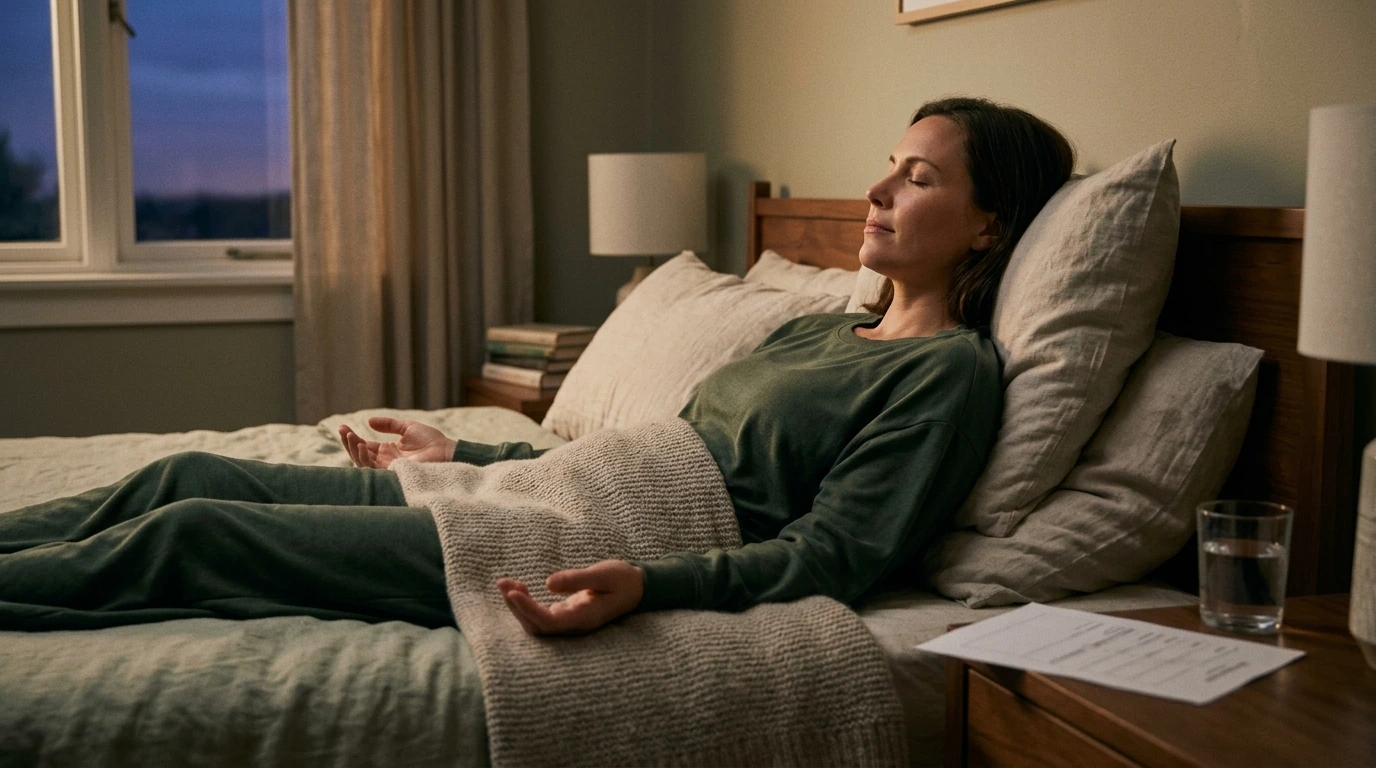
Relax and Recharge Checklist: A Simple Progressive Muscle Relaxation Routine for Daily Calm
A short daily reset can make it easier to unwind, quiet a racing mind, and ease into sleep. This checklist-style routine pairs progressive muscle relaxation with a few practical calming steps, so the process feels clear, repeatable, and supportive on busy or high-stress days.
What this checklist helps with
- Turning “too wired to rest” moments into a step-by-step wind-down
- Releasing physical tension that often accompanies worry and overstimulation
- Creating a consistent routine that supports calmer evenings and steadier days
- Reducing decision fatigue by following a simple sequence rather than improvising
- Building body awareness—spotting where stress collects (jaw, shoulders, hands, stomach)
Progressive muscle relaxation, explained simply
Progressive muscle relaxation (PMR) is a technique that alternates gentle tensing and releasing of muscle groups to encourage full-body relaxation. The point isn’t to “force” calm; it’s to notice contrast—tension versus release—so your nervous system gets a clear signal that it can downshift. PMR can work as a quick daytime reset or as part of a bedtime routine, and comfort matters: skip any muscle group that feels painful, crampy, or medically sensitive.
For more background on relaxation approaches and stress support, see the National Center for Complementary and Integrative Health (NCCIH) relaxation techniques overview and the American Psychological Association (APA) stress resources.
Set up your calm routine in under 2 minutes
- Choose a posture: lying down for sleep support, seated for daytime resets.
- Lower stimulation: dim lights, silence non-urgent notifications, and soften background noise.
- Use a steady breath: slow inhale through the nose, easy exhale through the mouth (no strict counting required).
- Pick a time boundary: 5 minutes (quick), 10 minutes (standard), or 15 minutes (deeper unwind).
If you like routines that don’t require memorizing steps, the Relax and Recharge Checklist – Progressive Muscle Relaxation Daily Calm Routine is designed to be printed and reused wherever you tend to feel most “on edge” (nightstand, workspace, travel bag).
Relax and Recharge checklist flow (PMR sequence)
- Start with a body scan: notice areas that feel braced, tight, or restless.
- Follow one consistent direction: lower body to upper body (or reverse) so your brain stops negotiating what to do next.
- Use a simple rhythm: gently tense for 3–5 seconds, then release for 10–15 seconds while exhaling.
- Move through the sequence: feet → calves → thighs → hips/glutes → abdomen → hands → forearms → upper arms → shoulders → neck (gentle) → jaw → eyes/forehead.
- Close it out: take two slow breaths and do a final scan for any remaining “hot spots” of tension.
PMR muscle groups and quick cues
| Muscle group | Gentle tension cue | Release cue |
|---|---|---|
| Feet | Curl toes lightly | Let toes spread and soften |
| Calves | Point toes slightly | Let ankles relax |
| Thighs | Press knees down or tighten thighs | Let legs feel heavy |
| Hips/Glutes | Squeeze gently | Release seat into support |
| Abdomen | Draw belly in lightly | Let belly soften with the exhale |
| Hands | Make a soft fist | Unclench; let fingers rest |
| Shoulders | Lift shoulders slightly | Drop shoulders away from ears |
| Jaw/Face | Press tongue to roof of mouth briefly | Unhinge jaw; soften around eyes |
How to fit this into a day (morning, mid-day, bedtime)
Morning (2–5 minutes)
Do a shortened sequence—shoulders, hands, jaw—so you’re not starting your day already braced. Keep it light: the goal is “less tense,” not “perfectly calm.”
Mid-day (5 minutes)
Use PMR as a reset after screen time, meetings, or commuting. If you’re seated, focus on hands, forearms, shoulders, and face, then take one longer exhale to signal the shift back to baseline.
Evening (10–15 minutes)
Pair the checklist with lower lighting and a consistent “end of day” cue—same chair, same blanket, or the same quiet playlist. Small consistencies train your brain to recognize what comes next.
Bedtime note
Keep tension levels gentle—aim for “barely tensing” so it doesn’t wake the body up. Many people like to add one comfort cue at the end (warm socks, a familiar scent, or a cozy layer). If warmth helps your body settle, Women’s Sheepskin Mules can be a simple at-home comfort option for the wind-down portion of the evening.
Make the checklist work for anxiety and sleep support
If anxiety feels severe, persistent, or disruptive, it can help to review reputable guidance and consider professional support. The National Institute of Mental Health (NIMH) overview of anxiety disorders is a solid starting point for understanding symptoms and treatment options.
What’s included and how to use the digital download
For a cozy “reset uniform” during your routine, a soft layer can be a practical cue that it’s time to downshift—like the Women’s Color-Blocking Letter Embroidery Oversized Sweatshirt for at-home lounging, reading, or post-work decompression.
Gentle safety notes and when to get extra support
FAQ
How long should progressive muscle relaxation take to feel helpful?
Most routines fit into 5, 10, or 15 minutes. Some people feel a shift right away, while others notice steadier benefits after a week of daily practice—consistency tends to matter more than intensity.
Can this routine be used for sleep if tension makes it hard to fall asleep?
Yes—keep the tensing very gentle, lengthen the release, and use dim lighting to avoid “waking up” the body. End with a final body scan and one calming cue so your last moments are focused on heaviness, softness, and support.
What if tensing certain muscles increases discomfort or anxiety?
Skip any sensitive areas and try micro-tension (barely engaging) or release-only while you breathe slowly. If symptoms escalate or feel unmanageable, pause the exercise and consider reaching out to a qualified clinician for tailored support.
















Leave a comment