Printable Fine Motor Skills Checklist: Fun Kids Activities
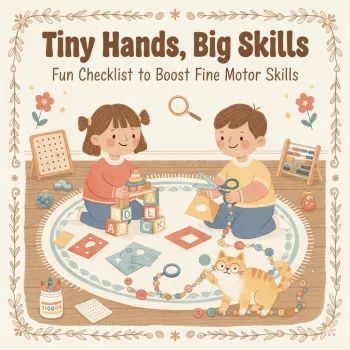
Fun Checklist to Boost Fine Motor Skills: Printable Activities Kids Actually Want to Do
Small hand movements power big milestones—writing, buttoning, cutting, feeding, and day-to-day independence at school and home. Our printable checklist turns fine motor practice into quick, low-prep moments that fit real schedules. You can use it as a weekly routine, a classroom center plan, or an at-home “pick one” menu that keeps kids motivated while building hand strength, coordination, and control.
If you like tracking progress without turning practice into a battle, a checklist gives you structure while still letting your child feel in charge of the activity choice.
What fine motor skills look like in everyday life
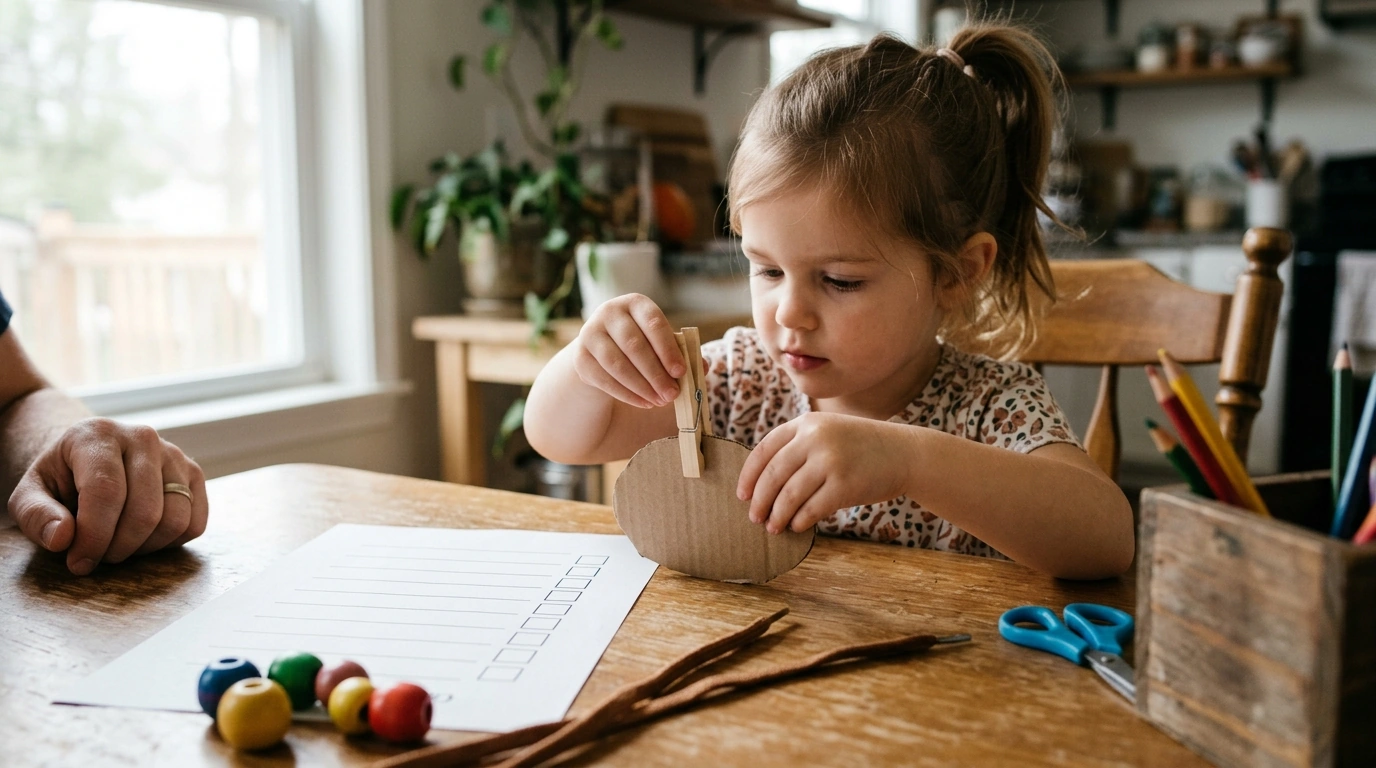
Fine motor skills aren’t just “handwriting skills”—they’re the small, precise movements your child uses all day. Here are a few core areas you can watch for during real routines:
- Pinching and grasping: picking up tiny objects, using tweezers or clothespins, holding a pencil with control
- Bilateral coordination: one hand stabilizes while the other works (holding paper while cutting, twisting lids, zipping)
- Hand strength and endurance: writing longer, squeezing glue bottles, using hole punches without fatigue
- In-hand manipulation: moving small items within the palm (shifting coins, rotating a crayon, repositioning beads)
- Hand–eye coordination: placing stickers, tracing shapes, stacking small blocks, lacing cards
For a broader look at developmental milestones, you can also reference the CDC’s milestone guidance or the American Academy of Pediatrics’ milestones.
Why a checklist works better than random worksheets
Worksheets can have a place, but they often over-focus on pencil tasks before the hand is ready. A checklist helps you build the foundation while keeping practice light and varied.
- Consistency without boredom: rotate short tasks so skills repeat while activities feel fresh
- Clear starting line: your child can choose simple “wins” first, then build up to trickier tasks
- Easy tracking: check marks show progress over days and weeks—helpful when parents, teachers, and therapists share goals
- Flexible for mixed ages: the same activity scales up or down (bigger beads vs. smaller beads; thicker crayons vs. pencils)
- Less prep: many activities use supplies already found in classrooms and kitchens
How to use the printable checklist (home, classroom, or therapy support)
Our team designed this format so you can start quickly and adjust as you go.
- Pick a rhythm: 5–10 minutes daily, or 2–3 longer sessions weekly—either works when it’s repeatable
- Offer choice: let your child select 1–2 tasks per day to boost buy-in and reduce resistance
- Pair with a purpose: connect practice to real life (zip up before going out, cut for an art project, write a note to a friend)
- Keep tools in a bin: crayons, scissors, tweezers, clothespins, beads, and paper in one place keeps momentum
- Celebrate effort, not perfection: look for smoother movement, longer stamina, and improved control over time
If you want deeper activity explanations and OT-style breakdowns, The OT Toolbox’s fine motor resource is a helpful companion reference.
Skill-building activity ideas to match the checklist
When you’re choosing tasks, aim for a mix: some strength work, some precision work, and some two-hand coordination.
- Grip & pinch: playdough pinch-and-roll, pick up pom-poms with tweezers, clothespin “color match” on a paper plate
- Cutting & control: snip straws, cut along thick lines, cut shapes from old magazines, fringe cutting on cardstock
- Writing readiness: trace paths/mazes, draw shapes in a salt tray, copy short patterns, connect-the-dots
- Bilateral coordination: lace cards, tear paper and glue collage, open/close containers, peel stickers and place within outlines
- In-hand manipulation: coin drop into a slot, move small beads from palm to fingertips one at a time, spin a pencil between fingers (older kids)
Weekly routine example (print, post, and check off)
| Day | Choose 1–2 Activities | Skill Focus |
|---|---|---|
| Monday | Tweezers pick-up game; Sticker placement inside shapes | Pinch strength; Hand–eye coordination |
| Tuesday | Playdough roll/snakes; Clothespin clip line | Hand strength; Tripod-like grasp practice |
| Wednesday | Snip paper strips; Tear-and-glue collage | Scissor control; Bilateral coordination |
| Thursday | Trace maze/path; Copy simple patterns | Pencil control; Visual-motor integration |
| Friday | Bead threading; Coin drop slot | Bilateral coordination; In-hand manipulation |
Simple ways to encourage fine motor skills without a struggle
Printable resource: a ready-to-use fine motor checklist for parents and teachers
If you want a simple system you can reuse week after week, our team put together a ready-to-print checklist that makes choosing activities (and sticking with them) much easier: Fun Checklist to Boost Fine Motor Skills (Printable Digital Download).
A few extra in-stock favorites that pair well with hands-on routines
- Women’s Color-Blocking Letter Embroidery Oversized Sweatshirt (cozy for crafts, centers, and chilly classrooms)
- Women’s Sheepskin Mules (easy slip-ons for quick drop-offs, pickup lines, and hallway duty)
- Automatic Quick-Open Camping Tent with Sun Protection & Spacious Cabin (great for backyard “fine motor stations” like lacing, clip boards, and sticker challenges outdoors)
FAQ
What are the best fine motor activities for preschoolers?
High-impact options include playdough pinch-and-roll, tweezers pick-up games, sticker placement, lacing cards, and simple paper snipping. You can scale difficulty by changing size (bigger pieces first), time (short bursts), and support (stabilize paper or use thicker tools).
How often should kids practice fine motor skills?
Short, consistent practice tends to work best: 5–10 minutes daily or a few sessions per week. Rotate activity types and stop before fatigue so your child builds skill and confidence without burning out.
How do you know an activity is too hard?
If you see strong frustration, avoidance, an overly tight grip, messy control, or quick fatigue, it’s likely too challenging right now. Adjust by using larger materials, thicker tools, fewer steps, or added stability, then revisit later.














Leave a comment