Do You Need a Car? Costs, Trips, and Best Alternatives

Do You Really Need a Car? A Clear-Headed Way to Decide (and What to Do If You Don’t)
Car ownership can feel like a default setting—until the payments, parking, insurance, maintenance, and daily stress start adding up. Our team put this guide together to help you make a practical decision based on your real life: the trips you actually take, what your car truly costs (money and time), and which transportation mix can replace it without shrinking your freedom.
The decision is bigger than “car vs. no car”
The most useful frame isn’t “car person” versus “car-free.” It’s outcomes: reliability, time, flexibility, safety, and predictable costs. Transportation works best as a toolkit—because one solution rarely covers every trip well.
- Separate needs from preferences: “must have for work/medical/family” vs. “nice for weekend convenience.”
- Watch for hidden defaults: paying to keep a car “just in case,” even if it’s parked 95% of the week.
- Recognize location reality: in some areas a car is essential; in others it’s primarily a convenience purchase with a high carrying cost.
A quick self-check: the trips that decide everything
Before you touch a spreadsheet, list the trips that truly determine whether you can function without a personal vehicle. Many people find the “car-required” list is surprisingly short once it’s written down.
- Write down your 10 most important trips in a typical month (work, groceries, gym, childcare, appointments, family visits).
- Mark what’s time-sensitive (school pickup, shift start) vs. flexible (shopping, social).
- Note cargo/passenger needs: kids, mobility devices, pets, bulky items, tools or equipment.
- Flag deal-breakers: late-night travel, weather exposure, safety concerns, limited transit coverage.
If only 1–2 trips are genuinely car-dependent, that’s a strong sign you should test targeted solutions (rentals or car-share) before committing to full-time ownership.
Real costs: what a car takes each month (even when it sits)
Monthly payments are only one slice. Fixed costs keep running whether you drive or not: insurance, parking, registration/taxes, and depreciation. Variable costs—fuel/charging, tires, repairs—can spike and wreck a “barely manageable” budget. And time costs are real: fueling stops, parking hunts, service appointments, and the occasional breakdown that derails your week.
For baseline context, authoritative sources like AAA’s Driving Costs break down ownership expenses, and the IRS standard mileage rates illustrate how quickly per-mile costs add up once wear, maintenance, and depreciation are considered.
Monthly car cost snapshot (fill with your numbers)
| Cost line | Typical frequency | Your estimate |
|---|---|---|
| Loan/lease payment | Monthly | $___ |
| Insurance | Monthly | $___ |
| Parking (home/work/permits) | Monthly | $___ |
| Fuel/charging | Monthly | $___ |
| Maintenance & repairs (averaged) | Monthly | $___ |
| Registration/taxes (averaged) | Monthly | $___ |
| Tolls/fees/washes | Monthly | $___ |
| Total monthly cost | — | $___ |
Lifestyle fit: when car ownership makes sense (and when it doesn’t)
Car ownership tends to make sense when your work hours are irregular, transit coverage is thin, frequent long trips are unavoidable, or accessibility needs require a personal vehicle. It tends to be optional when most trips are local, parking is expensive, transit is frequent, a safe bike network exists, or car-share coverage is strong.
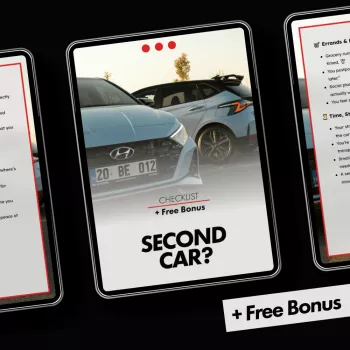
- Household structure matters: a second car is often the easiest place to save money without losing much mobility.
- Seasonality is real: if a car mainly solves winter or peak-schedule months, rentals can handle the surge.
- Try a “friction test”: if you use the car fewer than a few times per week for essential trips, alternatives are worth a serious look.
For a reality check on how people actually travel, the U.S. DOT National Household Travel Survey (NHTS) is a helpful reference point—especially when comparing your routine trips to broader patterns.
Smart alternatives: building a transportation mix that works
The goal isn’t to “replace your car” with a single substitute. It’s to build a reliable stack, where each option covers specific trip types well.
If you’re leaning into walking, biking, and waiting at stops more often, comfort basics matter. Many customers pair a car-light plan with practical layers like our Women’s Color-Blocking Letter Embroidery Oversized Sweatshirt and supportive everyday footwear like our Women’s Sheepskin Mules for quick errands.
A simple decision pathway: keep, replace, or go car-light
Make the choice with a worksheet, not guesswork
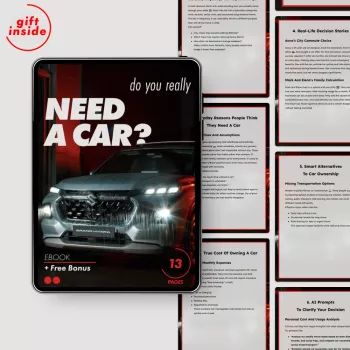
Decisions go better when you can see the tradeoffs on paper: fixed costs, variable costs, and those occasional “spike” expenses that blow up a month. If you want a guided, fill-in approach with decision prompts and cost comparisons, our team built Do You Really Need a Car? | A Practical Ebook on how to know if you really need a car, Real Costs, Lifestyle Fit & Smart Transportation Alternatives to help you compare scenarios (keep your current car, downshift to one car, or replace ownership with alternatives) based on your actual trips.
FAQ
What if a car is only needed a few times per month?
Compare your fixed ownership costs (insurance, parking, depreciation, registration) to a planned mix like transit plus a rideshare buffer and a couple of rental/car-share days. Track the specific “car-only” trips for 30 days; if most can be handled by targeted rentals, full-time ownership is often the expensive option.
How can car costs be estimated without getting lost in details?
Group costs into fixed and variable, then convert annual items (registration, taxes, maintenance reserves) into monthly averages. Don’t forget commonly missed lines like parking, tolls/fees, and a repair fund for the occasional big hit.
Is it realistic to go car-free in a suburb or smaller city?
It depends on transit coverage, trip patterns, safety infrastructure, and how much schedule flexibility you have. Start with essential trips, then build a layered backup plan; if fully car-free isn’t viable, a one-car household or rentals-only strategy can still cut costs sharply.














Leave a comment