45PCS Magnetic Tiles: Large Builds, Stability & Safety Tips
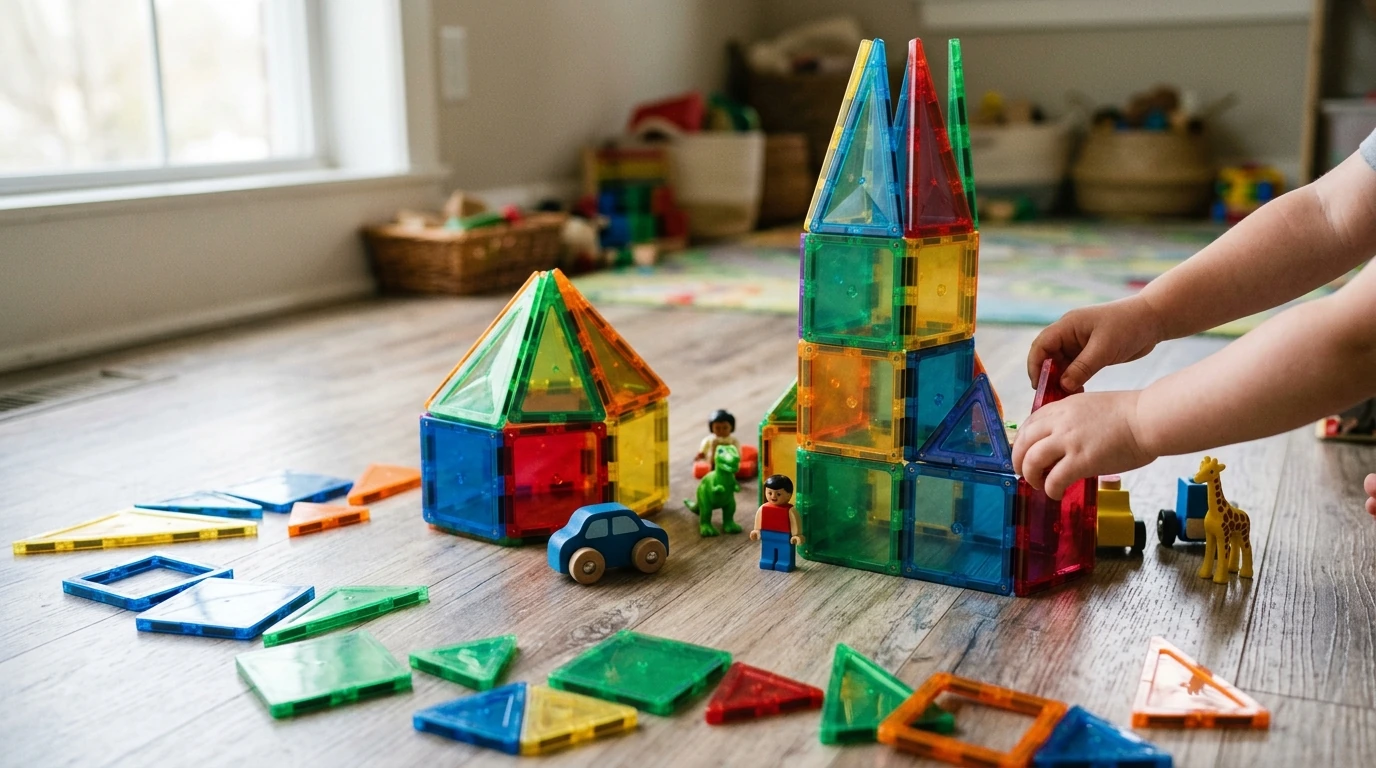
45PCS Large Magnetic Tiles Building Set: Big Builds, Easy Connections, Endless Play
A 45-piece magnetic tile set hits a satisfying middle ground: enough pieces to build taller towers, wider houses, and more detailed scenes, without the cleanup and decision fatigue that can come with giant sets. With large-format tiles, kids can get to “wow” builds faster—then keep iterating as their ideas change. Below is a practical breakdown of what a typical 45-piece set can do, which shapes matter most, stability tips that make a real difference, and what to check for safety and durability.
What a 45-piece magnetic tile set can do
With 45 pieces, kids can move comfortably between flat designs and early 3D builds, then start combining structures into simple “worlds.” It’s a strong choice for open-ended play because there’s no single “right” result—just better balance, smarter connections, and more creative layouts over time.
- Supports open-ended building: towers, simple vehicles, 2D mosaics, and beginner 3D structures
- Encourages problem-solving: balancing, symmetry, trial-and-error, and planning steps
- Works for solo play or small-group play with siblings or friends
- Pairs well with figurines, toy cars, and pretend-play sets to extend playtime
At-a-glance: typical tile shapes and what they’re used for
Most builds rely heavily on squares for structure, then use triangles to create roofs, ramps, and reinforcement. Some sets add special pieces (like windows and doors), which can dramatically expand pretend-play possibilities even if the overall piece count stays the same.
| Tile type | Best for | Quick build idea |
|---|---|---|
| Square | Walls, floors, sturdy bases | Build a cube house with a removable roof |
| Equilateral triangle | Roofs, patterns, prism-like shapes | Make a peaked roof for a garage |
| Right triangle | Ramps, bridges, support braces | Create a ramp for toy cars |
| Rectangle (if included) | Long walls, spans, frames | Build a tunnel or bridge span |
| Window/Door (if included) | Pretend play, room layouts | Design a “storefront” facade |
Why large magnetic tiles feel different from smaller sets
Large-format tiles change the building experience in a few important ways. Big surfaces make it easier to line up edges, see patterns clearly, and understand why a structure wobbles (or holds). That “bigger canvas” effect can help kids stick with a build longer, because early results look impressive fast—even if the design is simple.
- Bigger tiles help kids see structure and symmetry more clearly while building
- Large surfaces make it easier for small hands to align edges and corners
- Fewer total connections needed for a big build can reduce frustration
- Tall structures still need smart bracing—large tiles encourage learning stability techniques
Build stability tips that actually help
If builds keep collapsing, it’s rarely about “not enough pieces.” Most of the time, it’s about a narrow footprint or a lack of bracing. These small adjustments usually produce immediate improvement—especially with taller towers and multi-room houses.
- Start with a wide base: use squares to create a broader footprint before building upward.
- Use triangles as braces: adding triangles at corners reduces wobble and twisting.
- Build in layers: finish a stable “floor” before stacking the next level.
- Avoid very thin towers early on: widen first, then add height.
- Mix 2D and 3D: lay out a pattern flat, then “fold” it into a 3D shape.
Simple example: for a cube house, build a square base, add four wall squares, then reinforce two opposite corners by attaching triangles on the outside as “corner supports.” The house will feel noticeably sturdier without adding complicated steps.
Skills this kind of set can nurture
Magnetic tiles naturally invite kids to test ideas, revise plans, and try again—without the precision demands of tiny bricks. That combination supports both STEM-friendly thinking and creative storytelling.
- Spatial reasoning: rotating shapes mentally and predicting how pieces connect
- Early math: counting, sorting, symmetry, patterns, and basic geometry vocabulary
- Fine-motor control: aligning edges, controlled pressure, and careful stacking
- Collaboration: taking turns, dividing “build roles,” and negotiating design choices
For a deeper look at why play matters for healthy development, see the American Academy of Pediatrics’ guidance on the power of play.
Safety and quality checks to keep in mind
For magnet-related safety guidance, the U.S. Consumer Product Safety Commission offers a helpful overview on high-powered magnets.
Build ideas to rotate through the week
When 45 pieces is enough—and when it may feel limiting
Product spotlight: 45PCS Large Magnetic Tiles Building Set
If the goal is immediate, satisfying builds with large-format tiles and a manageable piece count, the 45PCS Large Magnetic Tiles Building Set is a strong fit. It works as a starter set for new builders or as an add-on to expand an existing collection.
| Item | Details |
|---|---|
| Name | 45PCS Large Magnetic Tiles Building Set |
| Price | $82.51 USD |
| Availability | In stock |
| Product page | View product |
More in-stock finds (giftable add-ons)
- Women’s Color-Blocking Letter Embroidery Oversized Sweatshirt
- Women’s Sheepskin Mules
- Automatic Quick-Open Camping Tent with Sun Protection & Spacious Cabin
FAQ
What age is a 45-piece magnetic tile set best for?
A practical range is preschool through early elementary, since younger kids can start with flat mosaics and simple walls, then progress to taller 3D builds as coordination improves. For younger children, close supervision is recommended with any toy that contains internal magnets.
How can builds be made sturdier without extra pieces?
Use a wider base, add triangles as corner braces, and build level-by-level rather than stacking quickly. For example, reinforce a cube by adding triangles to the outside corners to reduce twisting and wobble.
Can magnetic tiles be mixed with other sets?
Sometimes, but compatibility depends on brand, tile size, and magnet alignment. Check dimensions and test a small combined build first to confirm the pieces connect cleanly and hold firmly.













Leave a comment