39mm Desert-Dial GMT Watch: Automatic & Travel-Ready
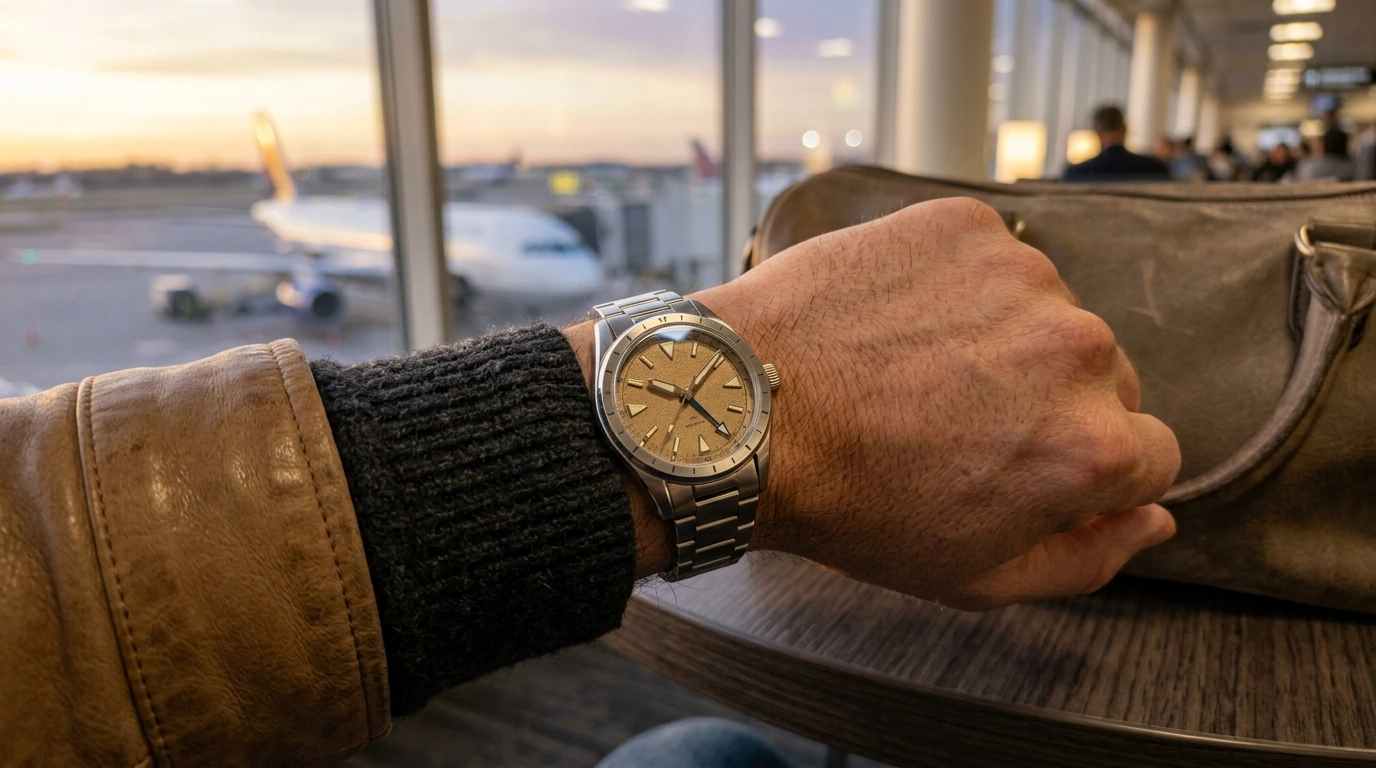
A compact 39mm GMT watch can be the sweet spot for everyday comfort and true travel utility. This luxury-style GMT pairs a refined case size with a distinctive desert-texture dial—so it looks elevated up close, yet stays easy to wear day after day. Add an automatic movement, waterproof construction, and luminous hands and markers, and you get a watch that’s ready for commutes, weekend trips, and keeping tabs on a second time zone without sacrificing balanced proportions. For more guidance, see The Top 11 GMT Watches Reviewed By StrapHabit.
What Makes This 39mm GMT Stand Out
- 39mm case size offers a balanced, versatile fit that suits a wide range of wrists and styles.
- GMT function supports tracking a second time zone for travel, remote work, or international calls.
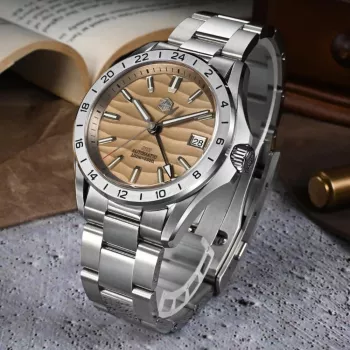
- Desert texture dial adds depth and character, shifting appearance under different lighting.
- Automatic movement provides mechanical appeal and convenience without regular battery changes.
- Luminous details improve readability in dim environments such as flights, evenings, and indoor venues.
Quick Specs at a Glance
A fast reference for core features that matter most when comparing GMT watches in the 39mm class. Use this snapshot to verify size preferences, travel utility, and everyday practicality before purchasing.
| Feature | What to Expect | Why It Matters |
|---|---|---|
| Case size | 39mm | Comfortable daily wear; balanced look for casual-to-smart outfits |
| Movement | Automatic (self-winding) | Mechanical ownership experience; no routine battery swaps |
| Dial | Desert texture finish | Distinct visual depth; helps the watch stand out without being flashy |
| GMT capability | Second time-zone tracking | Useful for travel, coordinating across regions, and monitoring home time |
| Water resistance | Waterproof design (rating varies by model spec) | Added confidence for rain, splashes, and day-to-day exposure |
| Lume | Luminous hands/markers | Better legibility at night, in cabins, and low-light spaces |
GMT Function Explained: Practical Ways to Use It
GMT isn’t just a “pilot watch” feature—it’s a real-life convenience you’ll feel immediately if your week involves travel, clients abroad, or family in another region. For a helpful overview of GMT and dual-time basics, see Hodinkee’s GMT and dual time glossary.
- Travel setup: set local time for your current location and keep the GMT hand on home time to avoid mental conversions.
- Work across regions: track a partner office or client time zone for calls, deadlines, and handoffs.
- Bezel reference (if applicable): use the bezel as a quick way to map the GMT hand to another time zone.
- Frequent flyer approach: keep GMT on UTC (“Zulu”) to standardize travel plans and logs.
Desert Texture Dial: Style, Legibility, and Light Play
A desert-texture dial is more than a design flourish—it changes how the watch reads on the wrist. Under bright daylight, a textured surface often looks crisp and granular; indoors, it can feel softer and more tonal, giving the watch a “quiet luxury” personality.
- Dimensionality helps readability: texture can make hands and indices pop for faster glances.
- Outdoor-friendly clarity: sand-like finishing often reduces harsh reflections compared with glossy dials.
- Easy to style: pairs naturally with earth tones, neutrals, and travel gear while still working with business-casual looks.
- Strap pairing ideas: metal for a sharper profile, leather for warmth, or rubber for a sport-travel vibe.
Automatic Movement Basics and Care
Automatic watches are powered by a mainspring and use a rotor that winds through normal wrist motion. If you rotate watches or don’t wear one daily, it may stop—nothing is “wrong,” it simply needs resetting (and sometimes a few initial winds depending on the design).
- Set the time and GMT hand carefully; avoid forcing the crown and always ensure it’s secured after adjustments.
- If the watch includes a date function, follow the manufacturer’s guidance on safe time windows for date changes.
- A periodic service schedule helps maintain accuracy and longevity; frequency depends on use and movement type.
Water Resistance and Lume: What They’re Good For
“Waterproof” in everyday use typically means better protection against splashes and rain, but real-world suitability depends on the specific depth rating and whether the crown is properly secured. For a clear explanation of how water-resistance ratings translate to use, reference Omega’s guide to watch water resistance and the ISO 22810 water-resistant watch standard.
- Daily exposure: water resistance is ideal for rain, handwashing splashes, and routine wear; swimming depends on rating and crown design.
- After salt or pool water: rinse (when appropriate per rating) and dry to help protect seals and finishes.
- Lume performance: luminous material charges under bright light and is most useful for quick reads in dark rooms, nightlife settings, and late commutes.
- Tip: give the dial a brief hit of strong light before stepping into low-light conditions.
Fit and Wearing Experience: Why 39mm Works
Recommended In-Stock Picks
- 39mm Luxury GMT Watch for Men with Desert Texture Dial – Automatic, Waterproof, Luminous ($454.01)
- Automatic Quick-Open Camping Tent with Sun Protection & Spacious Cabin ($691.17)
- Women’s Color-Blocking Letter Embroidery Oversized Sweatshirt ($33.51)
Buying Checklist Before Placing the Order
FAQ
How does a GMT watch help when traveling?
It lets you track local time and a second time zone (often home or office time) at the same time, which reduces mistakes with calls and schedules. If your model includes a compatible bezel, it can also help reference an additional offset quickly.
Does an automatic watch need a battery?
No. An automatic watch is powered by a mainspring that winds via wrist motion (and sometimes manual winding through the crown). If it isn’t worn for a while, it can stop and will need to be reset.
Is it safe to swim with a waterproof watch?
It depends on the specific water-resistance rating and whether the crown is properly secured. Follow the manufacturer’s guidance for swimming use, and avoid hot showers or steam, which can stress seals over time.









Leave a comment