10-Minute Ears-Only Escape Checklist for Calm & Focus
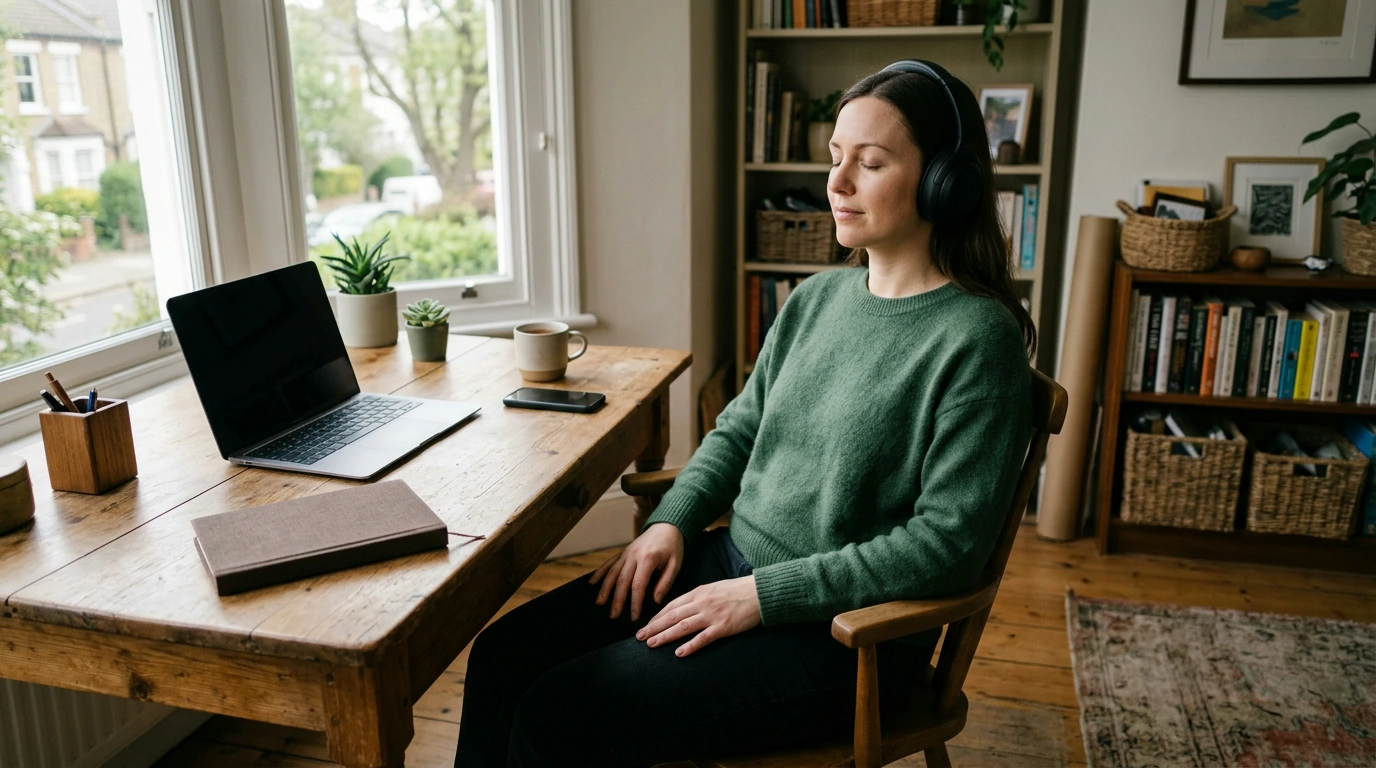
The Calm Sound Ears-Only Escape Checklist: A Step-by-Step Reset for Relaxation and Focus
Some days don’t need a full routine overhaul—they need a clean, repeatable reset. Our Calm Sound Ears-Only Escape Checklist is a simple step-by-step guide designed to help you create a small “quiet pocket” using sound, breathing, and a few quick environment tweaks. Use it to downshift from stress, regain focus before a task, or transition smoothly between work and rest.
What an “ears-only escape” means (and why it works so well)
An ears-only escape is a short, intentional break where sound becomes the anchor—helping your attention settle without needing a perfectly quiet room. Instead of trying to force calm, you’ll use a predictable sequence: set boundaries, choose a sound, guide your breathing, then return with one clear next step. That structure matters, especially in busy homes, open offices, and travel days where your mind keeps scanning for the next interruption.
Our team designed this to be repeated. The more consistent the steps, the faster your nervous system learns the pattern of “safe, steady, focus.”
When to use the checklist
You can use this reset any time you feel pulled in too many directions. A short sound-based break often works better than “powering through” because it gives your brain a stable input to lock onto.
| If this is happening… | Use the checklist to… | Aim for this result |
|---|---|---|
| Racing thoughts before starting a task | Create a clear start line | One focused next action |
| Tense shoulders / jaw after a call | Downshift and release | Body feels less “braced” |
| Distracted, checking phone repeatedly | Replace novelty-seeking with steady input | Longer attention spans |
| Overwhelmed by noise and interruptions | Build a small sound boundary | Feeling less reactive |
What to prepare in under 60 seconds
- A sound source: headphones/earbuds or a small speaker at low volume—simple and easy to reach.
- A single timer: set 5, 8, 10, or 15 minutes so the break stays contained and guilt-free.
- A physical cue: sit back, place your feet flat, or add a light layer—one sensory signal that it’s reset time.
- One-sentence intention: choose a single purpose like “calm my body” or “return to one task.”
The Calm Sound step-by-step checklist (the core sequence)
Step 1 — Set a boundary
Silence notifications, put your phone face-down, and (if needed) let someone nearby know you’ll be unavailable for a few minutes. This is less about perfection and more about removing the “what if something happens” tension.
Step 2 — Choose your sound
Pick one steady track: rain, brown noise, soft instrumentals, ocean, or a fan sound. Consistency helps your brain settle faster because there’s nothing to evaluate or compare.
Step 3 — Align posture
Relax your shoulders, unclench your jaw, and let your exhale be slightly longer than your inhale. If your body reads “safe,” your mind usually follows.
Step 4 — Breathe with the sound
For the first minute, simply match your breathing to the rhythm you hear. No perfect technique required—your job is just to keep returning to the sound.
Step 5 — Drop one layer
Scan from forehead to hands and soften one spot at a time. When thoughts show up, acknowledge them and come back to the sound like it’s a handrail.
Step 6 — Name the next step
Before you end, choose one specific action you’ll take next: open the document, wash dishes for 10 minutes, stretch, or respond to one message.
Step 7 — Re-enter gently
Lower the volume, remove headphones slowly, and begin the next action before your mind negotiates. The goal is smooth momentum, not a dramatic “reset feeling.”
A simple 10-minute schedule
| Minute | What to do | What to notice |
|---|---|---|
| 0–1 | Set timer, pick one sound, settle posture | Body shifts from “rush” to “ready” |
| 1–3 | Breathing with sound (steady, unforced) | Thoughts may still run; keep returning |
| 3–7 | Soften one area at a time (jaw, shoulders, hands) | Tension reduces in small increments |
| 7–9 | Let the sound carry you; minimal effort | Mind feels less grabby |
| 9–10 | Choose one next step and begin it | Momentum replaces overwhelm |
Choosing the right sound for your goal
Make it stick: simple ways to build the habit
Common stuck points (and quick fixes)
Pair it with comfort: small upgrades that support the reset
In-stock picks our team pairs with this reset
- The Calm Sound Ears-Only Escape Checklist – A Step-by-Step Guide to Relaxation and Focus
- Women’s Color-Blocking Letter Embroidery Oversized Sweatshirt (a simple warmth cue for wind-down resets)
- Women’s Sheepskin Mules (soft footing for a contained, cozy break)
Trusted guidance if you want to go deeper
- National Center for Complementary and Integrative Health (NCCIH): Relaxation techniques overview
- American Psychological Association (APA): Stress resources
- Harvard Health Publishing: Breath control and the relaxation response
FAQ
How long should an ears-only escape take?
For most situations, aim for 5–10 minutes. If you’re short on time, 3 minutes is a minimum viable reset; if you need deeper decompression, use 15 minutes and keep it contained with a timer.
Is this meant for relaxation, focus, or both?
It supports both—your sound choice and your “next step” determine the direction. Keep the sequence the same each time, then set your intent: return-to-task for focus or softer pacing for wind-down.
What if I don’t have headphones?
Use a low-volume speaker, place your phone audio nearby, or choose a consistent household sound like a fan. The key is a steady, non-distracting track and a quick boundary like silencing notifications.
















Leave a comment