City Car Ownership: Costs, Trade-Offs & Alternatives
City Car Ownership: Pros, Cons, and Smart Alternatives for Urban Life
Owning a car in a city can feel like freedom on some days and a burden on others. Congestion, parking, and costs compete with convenience, flexibility, and safety—especially when schedules, neighborhoods, and public transit options vary. This guide breaks down the real trade-offs and offers a practical way to decide when a city car helps, when it hurts, and how to make ownership work better if it’s the right fit.
What City Car Ownership Really Includes
City car ownership is more than buying a vehicle and filling the tank. In dense areas, the “extra” factors are often the deciding ones.
- Beyond the purchase price: insurance, registration, taxes, depreciation, maintenance, tires, fuel/charging, and unexpected repairs. AAA’s annual cost breakdowns are a helpful reality check for baseline ownership expenses.
- City-specific frictions: paid parking, street sweeping tickets, theft/vandalism risk, curb damage, and higher insurance premiums in dense ZIP codes.
- Time costs: circling for parking, traffic delays, and the ongoing mental load of moving the car for restrictions and permits.
- Lifestyle fit: commuting patterns, childcare needs, disability or mobility needs, work hours, and late-night safety considerations.
The Biggest Advantages of Having a Car in the City
A car can be a legitimate quality-of-life upgrade when it solves specific problems that transit, biking, and rideshare don’t solve as well.
- Door-to-door convenience: especially for bulk groceries, big-box runs, hardware store trips, or transporting bulky gear.
- Schedule control: when shifts start early/late, change frequently, or transit frequency drops.
- Access to transit gaps: industrial zones, suburban clients, and cross-town routes that require multiple transfers.
- Comfort and privacy: in heavy rain, heat waves, or when traveling with kids, pets, or equipment.
- Safety and personal security: for some travelers, a private vehicle can feel safer late at night or when carrying valuables.
- Weekend mobility: for spontaneous day trips without coordinating rentals or last-mile connections.
If weekend getaways are a major reason for keeping a car, it can help to pair your mobility plan with gear that makes quick trips genuinely easy—like the Automatic Quick-Open Camping Tent with Sun Protection & Spacious Cabin for fast overnights and short-notice plans.
The Most Common Downsides (and Why They Add Up Fast)
Many city drivers don’t regret the car itself—they regret the constant friction around it. Small daily hassles can compound into real cost and stress.
- Parking scarcity: monthly garage fees, time spent searching, ticket risk, towing, and permit restrictions.
- Traffic stress and unpredictability: a “10-minute drive” can flip to 35 minutes with congestion, construction, or events.
- Higher operating costs: city insurance premiums, higher fuel prices, and more wear from stop-and-go driving.
- Damage and theft exposure: break-ins, catalytic converter theft, scraped bumpers, and curb rash.
- Environmental impact: idling and short trips can increase emissions and concentrate particulate exposure in dense corridors. The EPA’s passenger vehicle emissions resources put these trade-offs in clear terms.
- Opportunity cost: money tied up in a vehicle could fund rideshare, transit passes, car-share, rentals, or other priorities.
Cost Reality Check: A Simple Way to Compare Options
Instead of debating in the abstract, use a simple comparison: fixed costs + variable costs + “pain points,” then line that up against mixed mobility options.
- Start with fixed costs: parking (home + work), insurance, registration/taxes, loan payment (if any).
- Add variable costs: fuel/charging, tolls, maintenance, repairs, and car washes.
- Estimate annual “pain points”: tickets, towing, break-ins, and deductible exposure.
- Compare against substitutes: unlimited transit pass, occasional rideshare, car-share hours, and weekend rentals.
- Decision trigger: if the car is used fewer than a few times per week, the convenience premium is often the biggest question.
Monthly Snapshot: Ownership vs. Mixed Mobility (Example Template)
| Category | City Car Ownership | Transit + Rideshare + Rentals |
|---|---|---|
| Parking (home/work) | $___ | $0–$___ |
| Insurance | $___ | $0 |
| Registration/taxes (monthly avg.) | $___ | $0 |
| Fuel/charging | $___ | $___ |
| Maintenance/repairs (monthly avg.) | $___ | $___ |
| Tickets/tolls (avg.) | $___ | $___ |
| Transit pass | $0 | $___ |
| Rideshare/car-share | $___ | $___ |
| Weekend rentals | $___ | $___ |
| Estimated total | $___ | $___ |
For baseline numbers and assumptions, it helps to cross-check with data sources like AAA’s “Your Driving Costs” and broader travel pattern stats from the U.S. Department of Transportation’s Bureau of Transportation Statistics.
Practical Strategies to Make City Ownership Easier
When It’s Usually Worth It (and When It’s Not)
A Deeper Decision Framework for Smart City Living
Recommended Read: City Car Ownership Pros and Cons (Practical Urban Driving eBook)
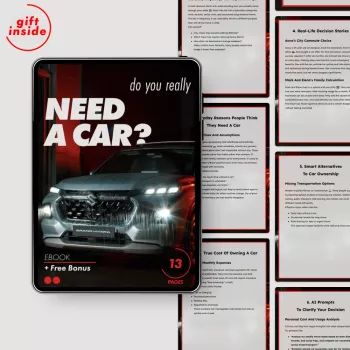
For a more structured way to make the call, City Car Ownership Pros and Cons – Practical Urban Driving eBook | Pros and Cons of Owning a Car in the City Guide for Smart City Living walks through cost, convenience, and decision prompts with practical checklists that fit real urban routines.
FAQ
Is it cheaper to own a car in the city or rely on transit and occasional rides?
It depends on fixed costs—especially parking and insurance—versus how often you actually drive. If you use a car only a few times per week, mixed mobility (transit + occasional rideshare + rentals) often wins on total monthly cost. Use the comparison template to plug in your real numbers and see where the break-even point lands.
What’s the biggest hidden cost of city car ownership?
Parking-related time and risk are the most commonly underestimated costs: circling, tickets, towing, and the stress of moving your car for restrictions. Close behind are higher city insurance premiums and frequent minor damage (bumper scrapes, mirror dings) that can lead to deductibles or rate increases.
How can a city driver reduce parking stress?
Start by locking in the most predictable option you can (off-street if feasible), then learn local permit rules and street-cleaning schedules. For high-demand destinations, budgeting for a garage can be cheaper than tickets and time lost searching. Smaller vehicles and consolidated errands also reduce how often parking becomes the main obstacle.














Leave a comment