Family Chore Chart Checklist: Split Tasks by Age & Time
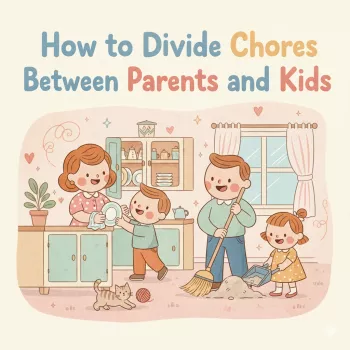
Checklist for Sharing Household Chores Between Parents and Kids
A simple, fair chore system reduces daily friction and builds skills kids carry into adulthood. The checklist below helps divide tasks by age, time, and ability—plus a ready-to-use family chore chart approach that keeps teamwork visible and consistent.
Start with a family reset: goals, time, and non-negotiables
Before assigning anything, do a quick “reset” meeting so everyone is solving the same problem. Keep it short (10–15 minutes) and practical.
- Pick 2–3 shared goals (calmer mornings, cleaner kitchen, less weekend catch-up, more fairness).
- List non-negotiables that must happen daily or weekly (dishes, laundry flow, trash, pet care, basic tidying).
- Estimate real weekly minutes for each chore; skip vague labels like “clean the house.”
- Define what “done” means (counters cleared and wiped; towels folded and put away).
- Choose one consistent reset moment (Sunday planning, after-dinner check-in, or Friday quick swap).
Weekly chore map (example) — match tasks to frequency and time
| Chore | Frequency | Estimated time | Notes on “done” |
|---|---|---|---|
| Dishes & kitchen reset | Daily | 15–25 min | Sink empty, counters wiped, trash checked |
| Laundry flow (sort/wash/dry/fold) | 4–7x/week | 10–20 min per step | Clothes folded and put away, not just in basket |
| Trash & recycling | 2–3x/week | 5–10 min | Bins out + liners replaced |
| Bathrooms (quick wipe + restock) | 1–2x/week | 15–30 min | Mirror wiped, toilet cleaned, towels replaced |
| Floors (vacuum/sweep) | 1–3x/week | 15–30 min | High-traffic areas finished; crumbs removed |
Divide chores fairly: a simple method that avoids resentment
“Fair” works better than “equal.” A good split accounts for schedules, energy, and the invisible work that keeps the household running.
- Assign by capacity, not by title: who has time, energy, and skill this week (deadlines, school projects, health).
- Balance visible and invisible chores: pair dishes and vacuuming with planning meals, tracking permission slips, or scheduling appointments.
- Use a two-bucket split: (1) daily maintenance, (2) weekly deep tasks—spread both across the family.
- Rotate the most disliked jobs: bathroom, litter box, trash, or scrubbing pans should not be lifelong assignments.
- Create a backup rule: if someone can’t do a chore, they trade for an equivalent time/effort task within 24 hours.
For motivation strategies that stay supportive (not punitive), see the APA’s definition of positive reinforcement and how it applies to building habits over time.
Age-appropriate chore ideas that teach real independence
Chores work best when they’re doable, repeatable, and connected to real life. Independence grows when kids “finish the loop” (start, complete, put away, reset).
- Ages 3–5: match socks, put toys in bins, wipe small spills, feed pets with supervision; focus on routine.
- Ages 6–8: set/clear table, make bed, sort laundry, empty small trash, water plants; keep instructions short and visual.
- Ages 9–12: load/unload dishwasher, vacuum, fold laundry, simple food prep, pack lunch checklist; introduce quality standards.
- Teens: cook 1–2 meals/week, manage laundry end-to-end, bathroom cleaning, yard work, babysitting support; tie tasks to life skills.
- Mixed ages: pair a younger child with an older “buddy” for 10 minutes, then let each finish their own task.
For additional guidance on building independence by developmental stage, HealthyChildren.org (AAP) offers practical parenting resources: HealthyChildren.org.
Chore chart setup: make it easy to start and hard to forget
A chore chart is less about control and more about clarity. When the work is visible, reminders decrease and follow-through improves.
- Choose a chart format: paper on the fridge, a whiteboard, or a shared note—keep it visible where chores happen.
- Limit daily assignments: aim for 1–3 items per kid; bundle small tasks into a “10-minute tidy” block.
- Use clear categories: Daily, Weekly, Monthly; avoid long lists that nobody checks.
- Add start triggers: after breakfast, before screen time, or right after school so chores attach to routines.
- Include a quick review: a 60-second check for completion and a simple “fix it now” window.
Motivation that builds responsibility (without constant reminders)
The goal is consistent contribution, not perfection. The best systems reduce nagging by making expectations obvious and outcomes predictable.
- Use natural consequences: clean uniform means ready for practice; messy backpack makes tomorrow harder.
- Praise the process: starting promptly, sticking with it, and checking quality matters more than flawless results.
- Use rewards sparingly: prioritize family privileges (choosing the movie) over paying for basic contributions.
- Offer choice within structure: “vacuum OR wipe the bathroom sink” keeps autonomy without debate.
- When chores stall, reduce friction: simplify steps, upgrade tools, and retrain calmly once.
For more on supportive, skills-based parenting approaches, the CDC’s parenting resources are a helpful reference: American Academy of Pediatrics-aligned parenting essentials (CDC).
Handling common sticking points: fairness, refusal, and uneven standards
A ready-to-use checklist and chart template
- Checklist: How to Divide Chores Between Parents and Kids | Family Chore Chart Guide for Teaching Responsibility & Teamwork (digital, ready to print and reuse)
FAQ
How many chores should kids have each day?
Most kids do best with 1–3 daily tasks, depending on age and schedule. Bundling small items into a single 10-minute tidy makes follow-through easier than tracking lots of tiny chores.
What if one parent ends up doing more even with a chore chart?
Track time and effort for a week, including invisible tasks like planning and scheduling, then rebalance. Rotating disliked chores and using a 24-hour trade rule helps the plan stay fair when schedules change.
Should kids be paid for chores?
Basic chores work best as non-paid family contributions, like clearing your own plate or helping with laundry. If you use money, reserve it for optional “extra” work beyond normal responsibilities, or consider privileges instead.
















Leave a comment