Foldable Bike Repair Stand for MTB & Road: Stable, Portable
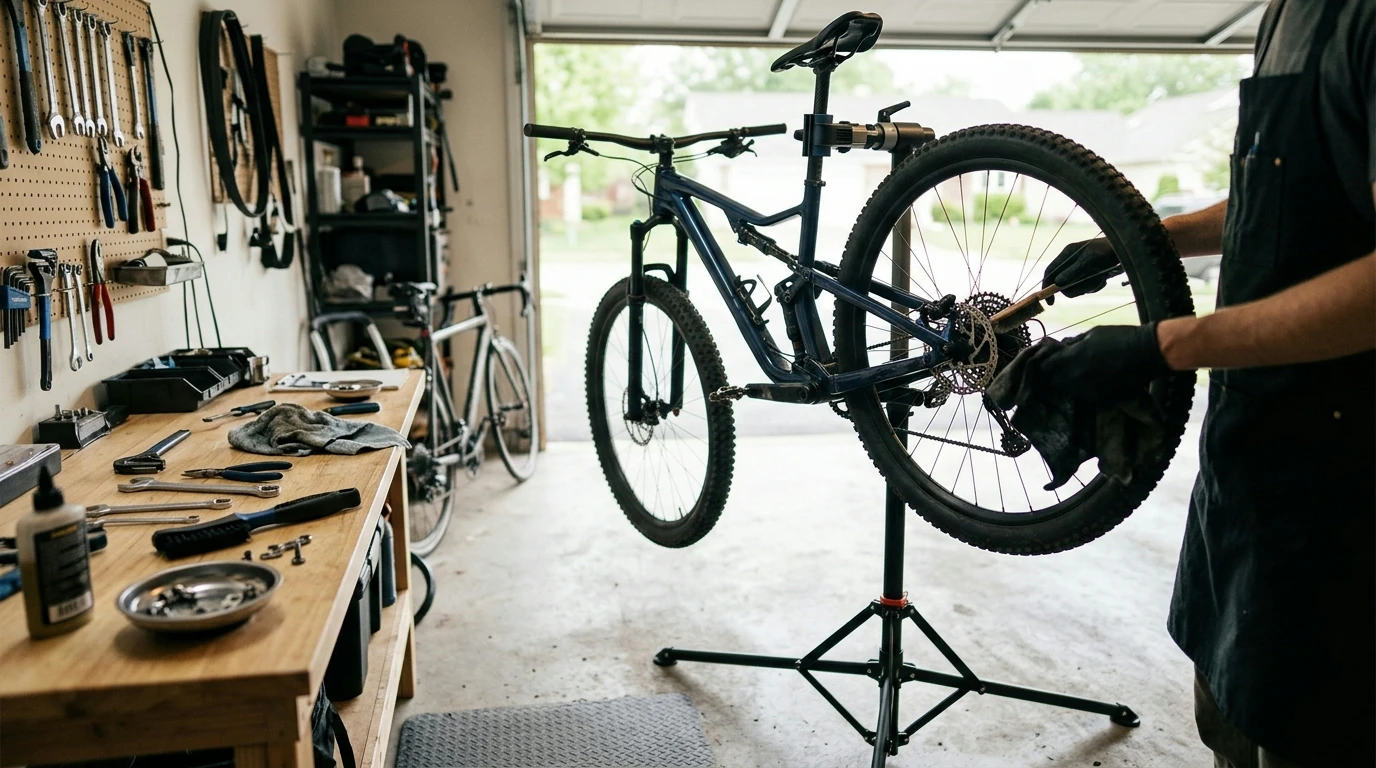
Foldable Bicycle Repair Stand: A Portable Workstation That Makes Bike Care Easier
A stable, height-adjustable workstation makes routine cleaning, drivetrain tuning, brake setup, and component swaps faster and safer than working on the ground. A foldable stand adds portability for small garages, apartments, race days, and trailhead fixes while keeping the bike secure at a comfortable working height. For more guidance, see Bicycles – Auxiliary Services – The University of Texas at Dallas.
For riders who maintain both road and MTB bikes, a foldable stand can be the difference between “I’ll do it later” and a quick, confident tune-up before the next ride. For further reading, see Bicycle Services – TAMU Transportation – Texas A&M University.
What a professional workstation changes in everyday maintenance
- Elevates the bike to reduce back and neck strain during longer tasks like drivetrain cleaning and cable/hose routing.
- Keeps wheels free-spinning for indexing gears, adjusting brakes, and checking rotor rub.
- Improves accuracy when setting saddle height, cockpit alignment, and drivetrain limits.
- Makes messy jobs cleaner by keeping the bike away from walls, floors, and stored gear.
- Encourages more frequent checks: bolt tightness, chain wear, tire condition, and bearing play.
Many core procedures follow the same logic used by pro mechanics: stabilize the bike, control the variables, and make small adjustments while observing real movement. If you want step-by-step references for common fixes, Park Tool’s Repair Help library is a reliable resource, and component-specific details are best confirmed via Shimano Dealer’s Manuals.
Key features to look for in a foldable stand
- Clamping system: secure grip, protective jaw material, and easy one-hand operation.
- Height adjustment range: accommodates road bikes, MTBs, and comfortable standing or seated work.
- Rotation capability: rotating clamp head helps position the drivetrain or cockpit for access.
- Base footprint and stability: wider stance resists tipping when removing stubborn pedals or cranks.
- Fold and carry design: quick collapse, manageable stored size, and easy transport for events.
- Compatibility: fits common seatpost and frame tube shapes; avoids damage to carbon by clamping correctly.
- Accessory support: tool tray, parts bin, or mounting points reduce trips to the toolbox.
Practical detail that matters: a stand that’s quick to deploy gets used more often. That usually means fewer “mystery creaks,” fewer last-minute drivetrain surprises, and cleaner bikes year-round.
Setup tips for a stable, damage-free hold
- Clamp the seatpost whenever possible; avoid clamping carbon tubes unless the manufacturer allows it.
- Clean the clamping area to prevent grit from marring finishes; use a rag before tightening.
- Tighten only as much as needed to prevent rotation—overtightening can crush lightweight posts.
- Position the bike’s center of mass over the stand’s base; keep heavy bags and accessories off the bike.
- For stubborn work (bottom bracket, pedals), lower the bike slightly and keep one hand on the frame to control torque.
- On uneven surfaces, place the stand on the flattest area and orient one leg toward the highest load direction.
If you’re working with a carbon seatpost or a dropper post, take the conservative path: check the bike maker’s guidance, clamp gently, and prioritize stability through positioning rather than clamp force.
Common jobs made easier on a stand (MTB and road)
Quick comparison: floor work vs. a foldable workstation
| Method | Best for | Limitations |
|---|---|---|
| Foldable repair stand | Tuning shifting, brake alignment, drivetrain cleaning, component swaps | Needs flat setup area; clamp technique matters for carbon parts |
| Bike upside down (on saddle/handlebar) | Emergency fixes, quick chain lube, simple checks | Risk of scratching controls; awkward for precise adjustments |
| Leaning against a wall | Very quick inspections | Unstable for torque-heavy work; higher chance of slipping and falling |
Care, storage, and longevity
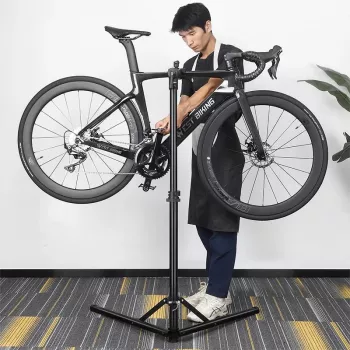
Product spotlight: Foldable Bicycle Repair Stand – Professional Bike Workstation for MTB & Road
Foldable Bicycle Repair Stand – Professional Bike Workstation for MTB & Road is designed as a portable workstation for common MTB and road maintenance tasks. The foldable format helps reclaim floor space when not in use and simplifies transport for event-day support. It’s a practical upgrade for riders who do regular cleaning, tuning, and seasonal overhauls—especially in home garages or apartments where storage matters.
If you frequently wrench away from home, setting up a small “pit area” can help keep tools and parts organized. Pairing your workstation with a fast shelter like the Automatic Quick-Open Camping Tent with Sun Protection & Spacious Cabin can make race days or long trailhead sessions more comfortable when weather turns. And after the work is done, comfortable slip-ons such as Women’s Sheepskin Mules can be a nice touch for garage time at home.
FAQ
Where should a bike be clamped on a repair stand?
Clamp the seatpost whenever possible, since it’s designed to handle clamping loads better than frame tubes. Avoid clamping carbon frames or droppers unless the manufacturer specifically approves it, and use the minimum pressure needed after cleaning the contact area.
How do you keep a foldable repair stand from tipping during stubborn bolt removal?
Fully extend the legs, lower the bike slightly, and position the bike’s weight centered over the base. Apply controlled torque with the correct tool, and stabilize the frame with a free hand to prevent sudden shifts while loosening pedals, cranks, or tight fasteners.
Is a foldable stand steady enough for MTB work like brake bleeding or drivetrain tuning?
Yes—on a flat surface, a properly set up foldable stand is well-suited for precision tasks like brake alignment, bleeding prep, and drivetrain tuning. Avoid extreme side loads and re-check clamp tightness if the bike rotates, especially with heavier MTB setups.













Leave a comment